Choosing between custom vs stock cabinets depends on your budget, timeline, and required durability. Custom cabinets offer a superior lifespan of 30 to 50 years and unique design flexibility, whereas stock cabinets are more affordable and ready for immediate installation but typically only last 5 to 15 years. While the initial cost of custom work is higher, the use of furniture grade materials often provides better long term value for homeowners.
You finally decide to remodel your kitchen, only to find yourself staring at rows of pre-built boxes that look identical but vary wildly in price. It is the ultimate homeowner dilemma; do you save money now or invest in something that will actually survive a decade of heavy use? At Gobes Cabinets, we believe the true value of cabinetry is revealed long after the initial installation. A beautiful door front can easily hide thin particle board or unstable joints that fail under the weight of stone countertops. This guide draws on our hands-on experience as installers to bridge the gap between aesthetic appeal and structural reality. We will explore the hierarchy of cabinet tiers, from the convenience of stock options to the precision of custom craftsmanship. You will learn which materials truly hold up under daily pressure and how each choice affects the final, seamless look of your Utah home.
Understanding the Hierarchy: Stock vs Semi-Custom vs Custom Cabinets
Selecting new cabinetry involves navigating three distinct tiers: stock, semi-custom, and custom. Each category represents a different approach to manufacturing, lead times, and long-term durability. Stock cabinets are mass-produced in fixed, standard increments and are typically available within a few weeks. Semi-custom cabinets utilize standard box dimensions but allow for interchangeable door styles, specialized finishes, and internal upgrades. Custom cabinets are built entirely to order with no size limitations, allowing for a precise fit in any layout.
From a professional cabinet installation perspective, the differences between these options are most visible during the mounting and alignment process. While a stock unit and a custom unit might look similar from five feet away, the engineering behind the face frame and box construction varies wildly. Stock options often rely on staples and thin backing, whereas high-end custom builds utilize superior joinery and furniture-grade plywood.
Cabinet Tier | Typical Lifespan | Design Flexibility | Lead Time |
|---|---|---|---|
Stock | 5 – 15 Years | Very Low | 0 – 3 Weeks |
Semi-Custom | 15 – 25 Years | Moderate | 4 – 8 Weeks |
Custom | 30 – 50 Years | Unlimited | 8 – 16+ Weeks |
For homeowners in Fillmore, the choice of custom vs stock cabinets usually comes down to a balance between immediate budget and a "forever home" mentality. A stock kitchen might satisfy a quick update for a temporary residence; however, a custom build offers the longevity required for a legacy property. Utilizing custom cabinet expertise ensures the chosen hierarchy matches both the budget and the architectural demands of the home. To see how these different tiers look once installed, you can view our cabinet portfolio to compare finished projects.
Stock Cabinets: The Fast Fashion of Kitchen Remodeling
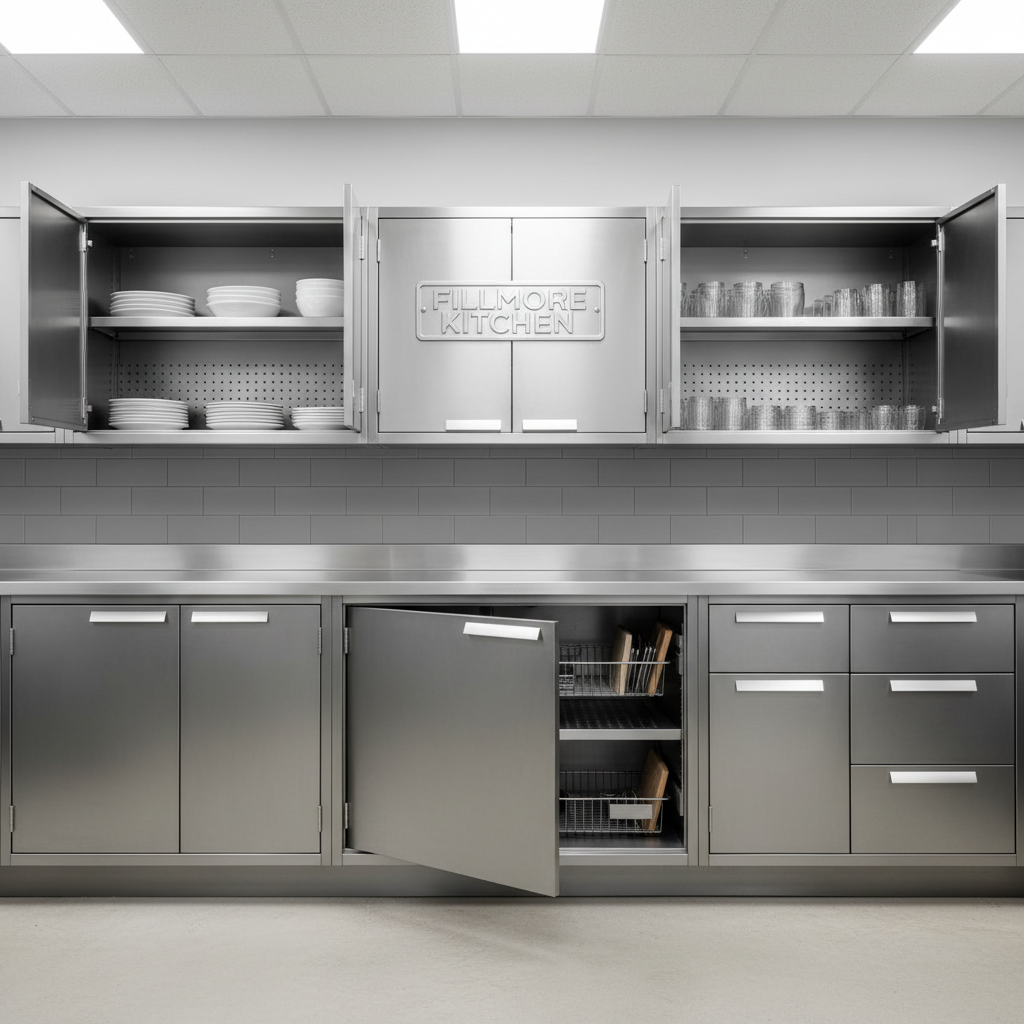
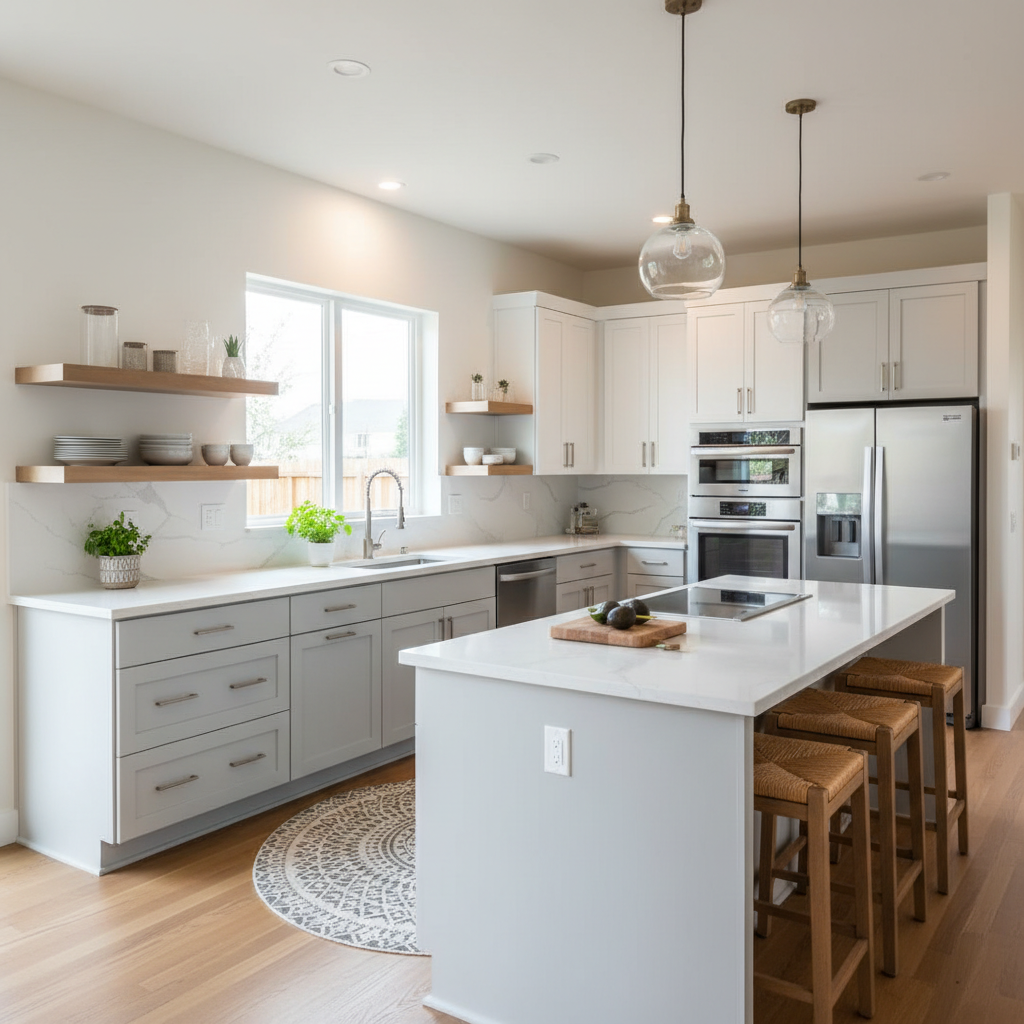
Stock cabinets serve a specific niche, primarily for quick turnarounds and strict budgets. Much like fast fashion, they are designed for immediate availability rather than generational durability. Large retailers and RTA (Ready-to-Assemble) manufacturers produce these units in massive quantities using fixed 3-inch increments. For homeowners asking if a $10,000 budget is enough for a full kitchen remodel, stock cabinets are generally the only realistic path for a complete cabinet replacement. Prices typically range from $75 to $250 per linear foot, making them accessible for rental properties or entry-level updates.
The lower price point is achieved through specific material trade-offs that homeowners should understand. Most stock lines utilize particleboard or lower-density MDF for the box construction. These materials are highly susceptible to moisture; even minor leaks under a sink can cause the substrate to swell, crumble, and lose structural integrity. Furthermore, thin box walls may struggle to support the immense weight of heavy granite or quartz countertops over several years, which often leads to sagging or hardware misalignment. If you view our cabinet portfolio, the difference in how various materials age under daily use becomes clear.
From an installation standpoint, the biggest drawback is the filler problem. Because these cabinets only come in standard widths, they rarely match the specific dimensions of a room's walls perfectly. This leaves gaps that must be covered with wide filler strips, essentially creating dead space that could have been functional storage. While our team provides professional cabinet installation to ensure these units are as secure and level as possible, the inherent limitations in the custom vs stock cabinets debate mean you will likely sacrifice several inches of potential drawer or pantry space to accommodate pre-built sizes. While they offer a fast solution, the trade-off is a loss of efficiency and a shorter total lifespan for the kitchen.
Semi-Custom Cabinets: Finding the Middle Ground
Semi-custom cabinets represent the most frequent choice for mid-range residential projects in Fillmore. They provide a vital bridge in the custom vs stock cabinets debate by offering structural upgrades that stock lines lack, specifically the option for all-plywood box construction. While stock units often rely on thin particleboard, semi-custom manufacturers allow us to specify 1/2-inch or 3/4-inch plywood boxes. This structural reinforcement is critical for supporting heavy quartz or granite countertops and maintaining alignment for 15 to 25 years.
From a design perspective, this tier moves away from the rigid limitations of mass production. You aren't restricted to a handful of basic finishes; instead, you gain access to a broad palette of stains and paints. Lead times typically range from four to eight weeks, which aligns well with the timeline of a standard home renovation. This middle ground also allows for high-end functional upgrades that feel custom, such as:
Integrated pull-out spice racks and trash bins
Soft-close hinges and under-mount drawer glides as standard features
Specialty corner solutions like Lazy Susans or kidney-shaped pull-outs
Increased depth for island cabinets or vanities
While these units are still built in set increments, many semi-custom lines offer width adjustments in one-inch intervals. This flexibility significantly reduces the need for the wide, unsightly filler strips mentioned in the previous section. When we provide professional cabinet installation for semi-custom lines, the result is a kitchen that feels tailored to the home without the extended wait times or the five-figure price premiums of a full custom shop. You can view our cabinet portfolio to see how these mid-range options balance aesthetic variety with long-term structural integrity.
Custom Cabinets: The Precision Fit for Utah Homes
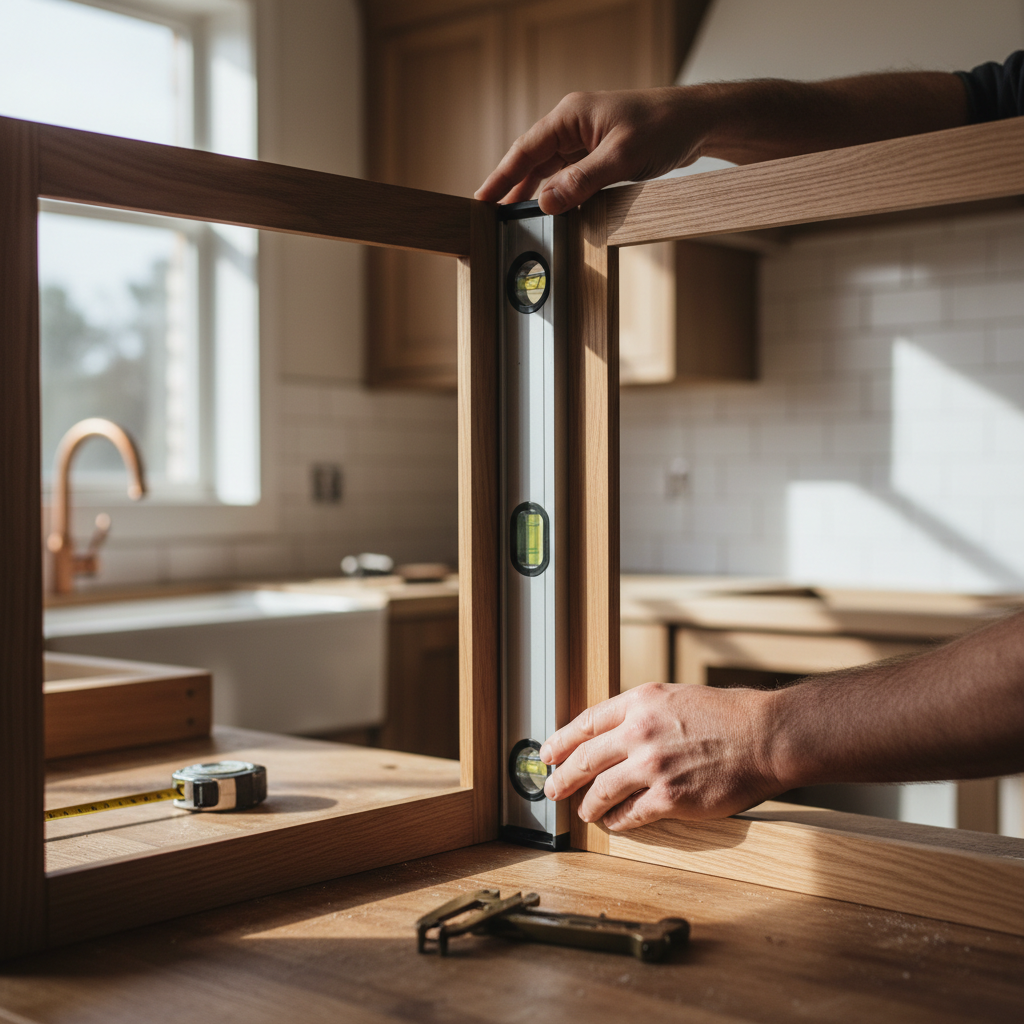
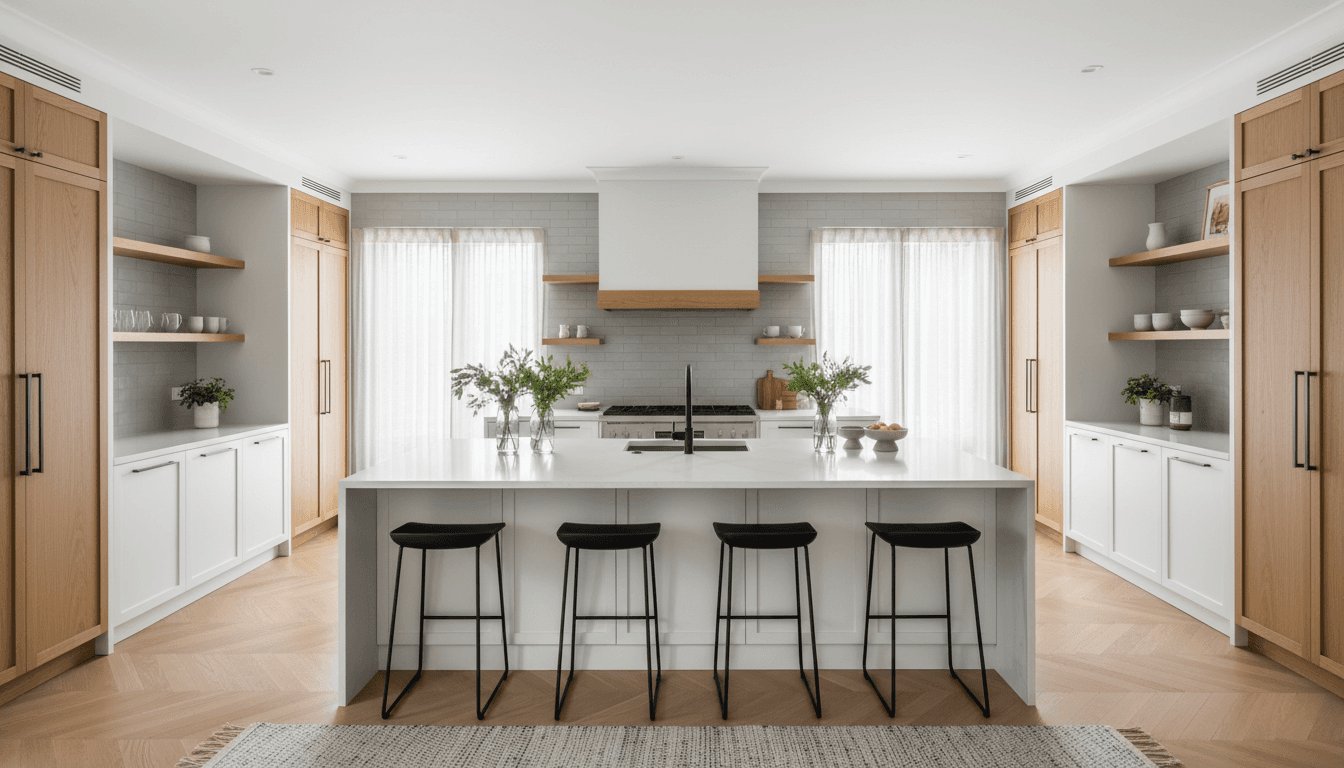
A true custom build eliminates the "close enough" approach of factory-produced units. In custom manufacturing, every cabinet box is engineered to the exact fraction of an inch required by the room layout. This level of custom cabinet expertise is particularly valuable in Fillmore, where many residential properties feature historic architecture, sloped ceilings, or chimneys that create non-standard wall angles. Instead of covering these quirks with wide filler strips, a custom build integrates the cabinetry directly into the architectural footprint, maximizing every square inch of storage.
The structural integrity of custom cabinetry relies on furniture-grade plywood for the box and solid wood for the face frames. Unlike the mass-produced alternatives that use thin back panels for support, custom units are built as self-supporting furniture. This robust construction allows for wider drawer banks and taller pantry units that will not bow or rack over time. When comparing custom vs stock cabinets, the material density alone explains why custom units can safely carry the weight of exotic stone countertops without internal reinforcement.
Feature | Stock Cabinets | Custom Cabinets |
|---|---|---|
Box Material | Particleboard / Thin MDF | 3/4" Furniture-Grade Plywood |
Face Frame | Pocket-screwed or stapled | Solid hardwood joinery |
Wall Fit | Uses 3-6" fillers | Exact wall-to-wall fit |
Expected Lifespan | 5 – 15 Years | 30 – 50 Years |
Homeowners often ask if custom cabinets are worth the higher upfront investment. The answer lies in the total cost of ownership over the life of the home. A cheap stock kitchen typically requires replacement after ten years as hinges pull out of particleboard and finishes delaminate. A custom build, however, frequently lasts 40 years or more. While the initial price per linear foot is higher, the cost per year is significantly lower; it provides a superior long-term return on investment. You can view our cabinet portfolio to see how these high-end installations integrate into unique Utah floor plans.
Construction Quality: What Actually Holds Up Under Daily Use
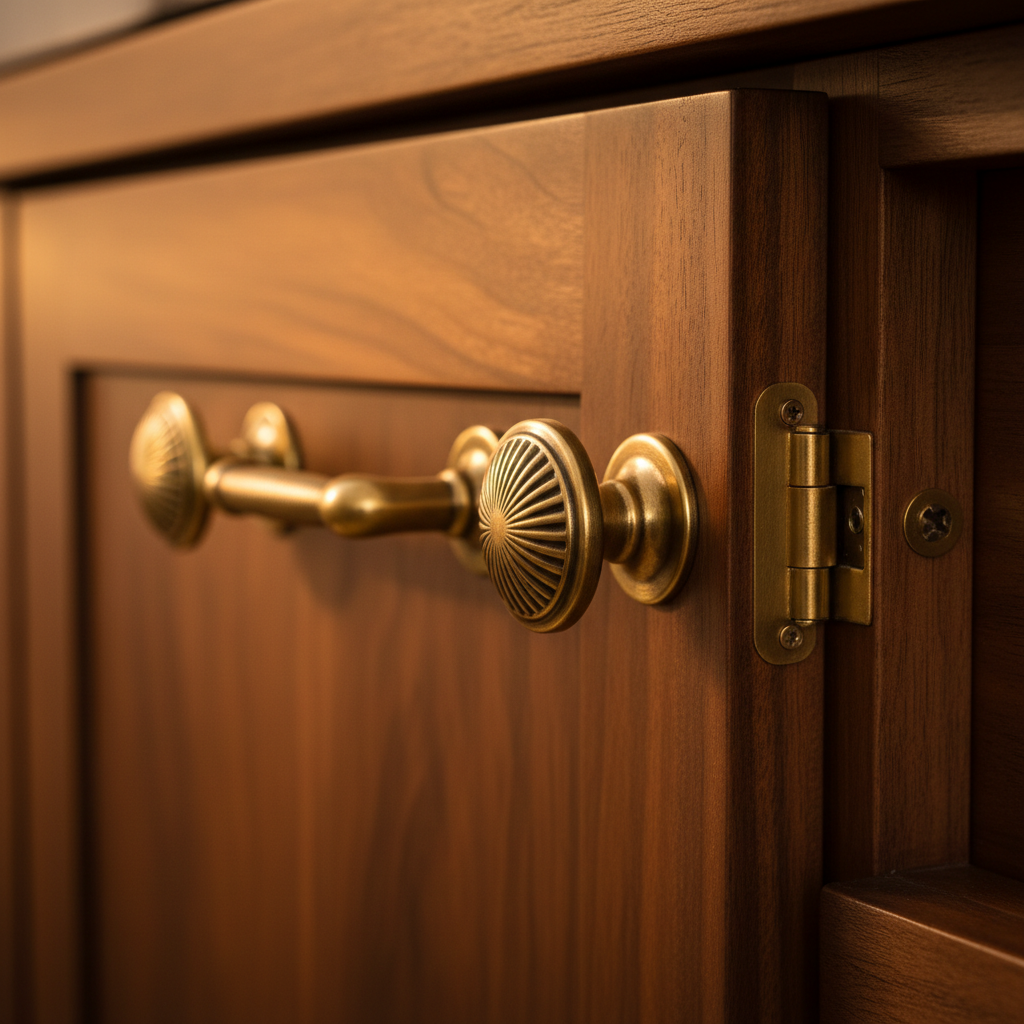
The structural integrity of a cabinet is determined by how the components are joined and the quality of the moving parts. In the discussion of custom vs stock cabinets, joinery is a primary differentiator. High-end custom and semi-custom units typically feature dovetail drawer boxes, which use interlocking wedge-shaped cutouts to create a mechanical bond. This is vastly superior to the staples and hot-melt glue used in most stock options. Over years of daily use, the repetitive pulling motion on a drawer puts tension on the front panel; staples eventually pull through soft particleboard, while dovetail joints tighten under tension.
Hardware serves as the engine of the kitchen. We prioritize brands like Blum or Hettich for their high-cycle ratings and precision adjustability. These hinges and glides allow for micro-adjustments that keep doors perfectly centered. In contrast, stock cabinets often come with generic hardware that lacks long-term tension, leading to sagging doors that won't stay shut. The weight of the cabinet box itself also plays a role in alignment. A heavy, 3/4-inch plywood box possesses the rigidity to stay square even if the house settles slightly, whereas lighter, thinner materials are prone to racking, which throws the entire run of cabinetry out of plumb.
Environmental factors in Fillmore, Utah, are particularly harsh on cabinetry. Our extremely dry climate causes natural wood to move as it loses moisture. True custom cabinet expertise involves selecting materials and construction methods that account for this movement. High-quality builds utilize solid wood frames and floating panels that can expand and contract without cracking. Low-end stock options often use thin veneers or foil wraps over unstable substrates; when the air dries out, these materials are prone to delaminating or warping. You can view our cabinet portfolio to see how properly constructed cabinetry maintains its crisp lines and functional alignment despite the local environmental shifts. When we perform professional cabinet installation, we ensure the hardware is tuned specifically to the weight of the doors to prevent premature wear.
Installation Realities: How Cabinet Type Affects the Final Look
Installation labor varies significantly depending on the quality of the box construction. Stock cabinets, manufactured in high volumes, frequently arrive with slight deviations in squareness. When mounting these units, we spend more time leveling and shimming to compensate for factory inconsistencies. If the box is not perfectly square, the face frames will not align, leading to uneven gaps between doors that no amount of hinge adjustment can fully correct.
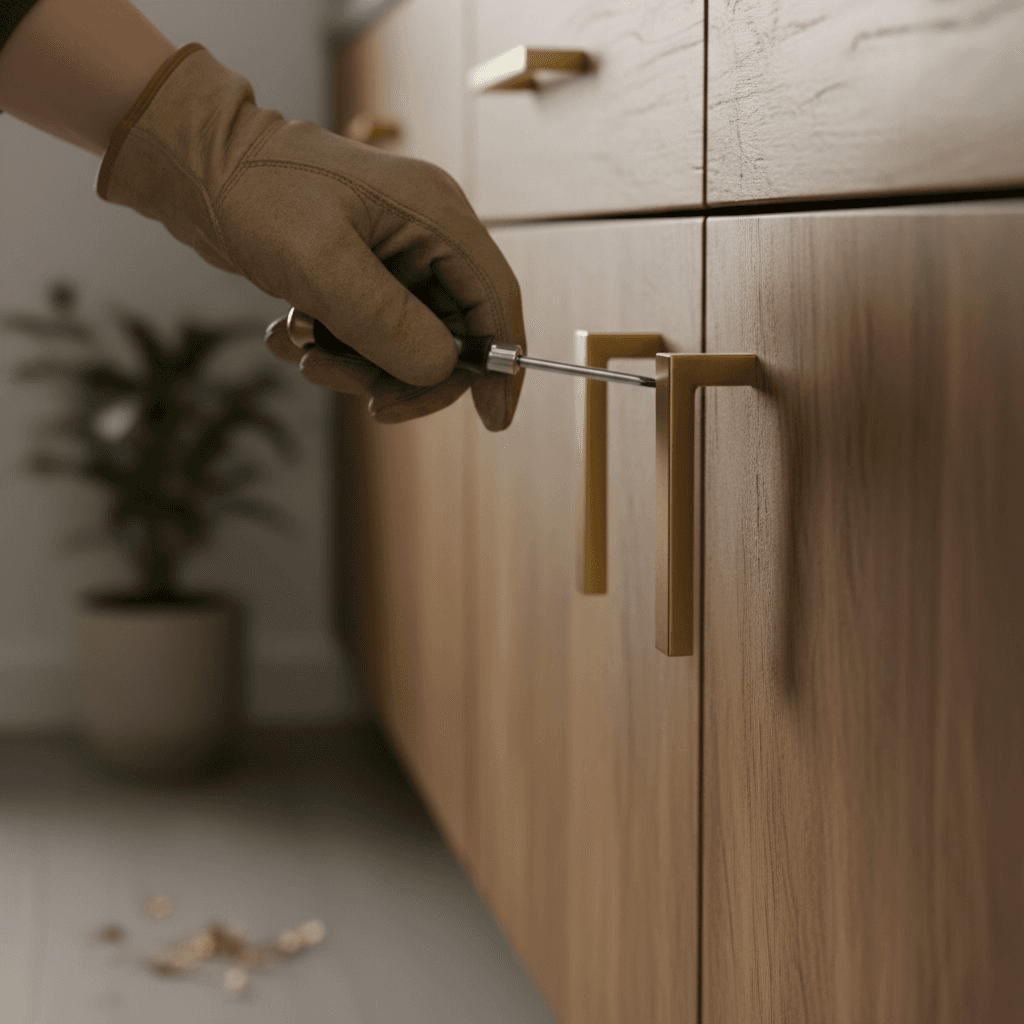
In contrast, custom units are built to the specific measurements of your walls. This precision reduces the reliance on wide filler strips and allows for a scribe-fit against the drywall, creating a seamless, built-in aesthetic. While we apply our custom cabinet expertise to reinforce stock units during professional cabinet installation, ensuring they are securely anchored to the studs to prevent back-panel separation, the structural limitations of the material remain.
Installation Factor | Stock Cabinets | Custom Cabinets |
|---|---|---|
Squaring & Leveling | Extensive shimming required | Minimal field adjustment |
Seams & Joints | Visible fillers at wall ends | Scribed, seamless transitions |
Box Rigidity | Prone to racking under pressure | Rigid, furniture-grade stability |
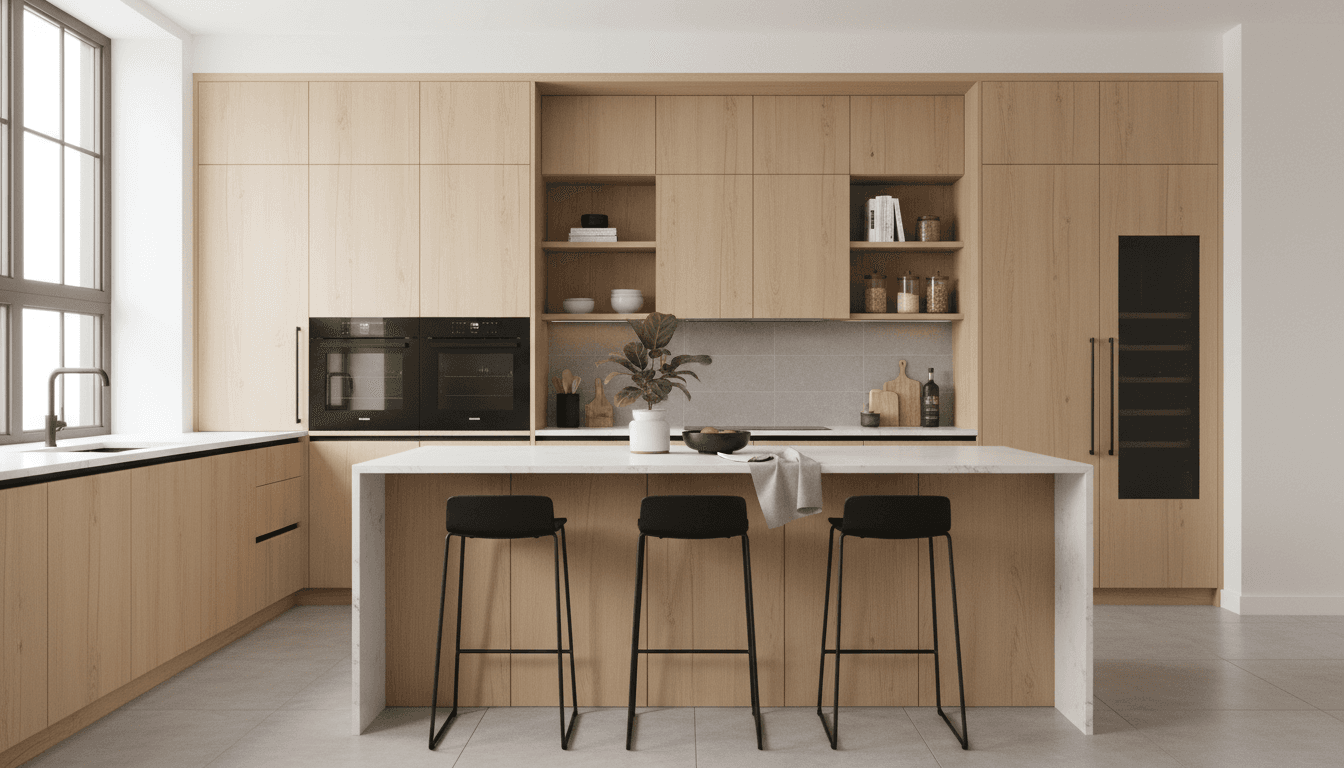
The final look in the custom vs stock cabinets comparison is most evident in the details. Custom cabinets provide a continuous flow that stock options cannot replicate due to their fixed increments and necessary gaps. You can view our cabinet portfolio to see how professional fitting transforms a space, regardless of the cabinet tier selected for the project.