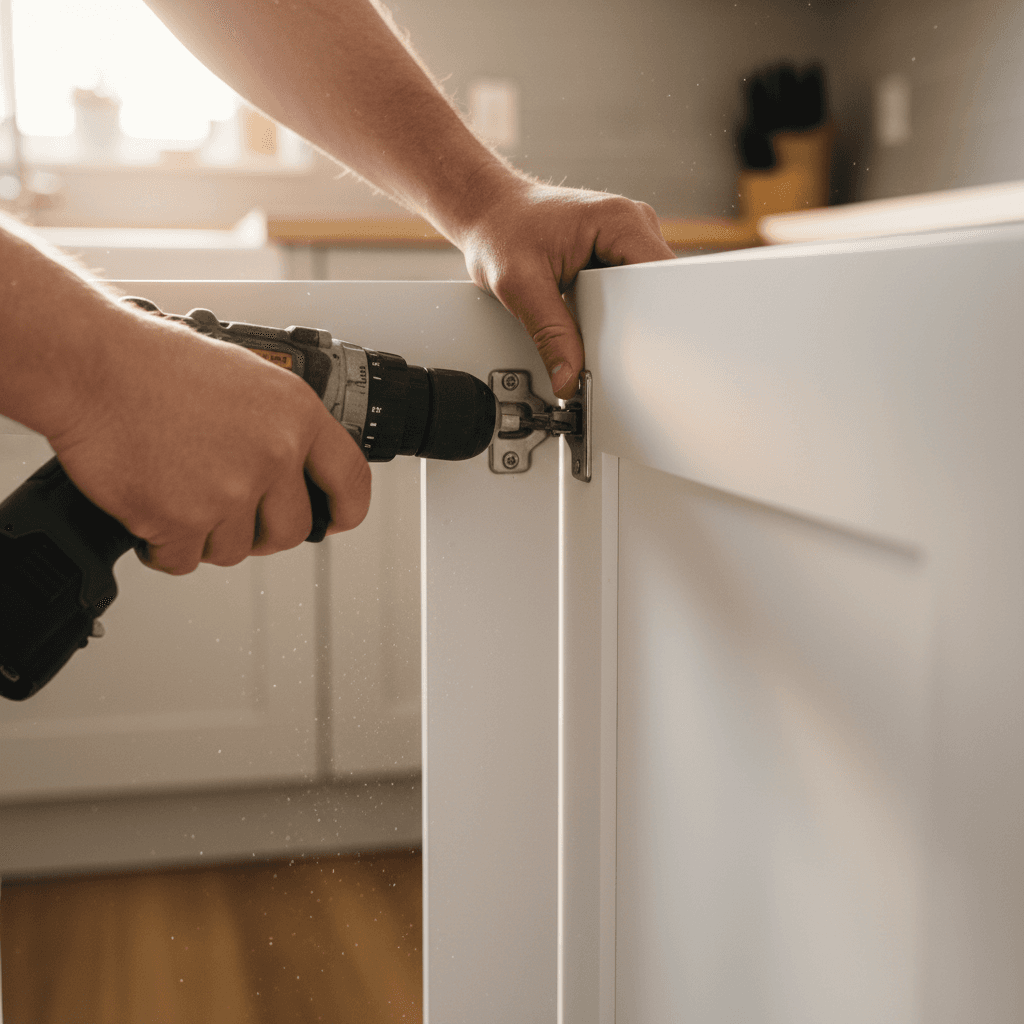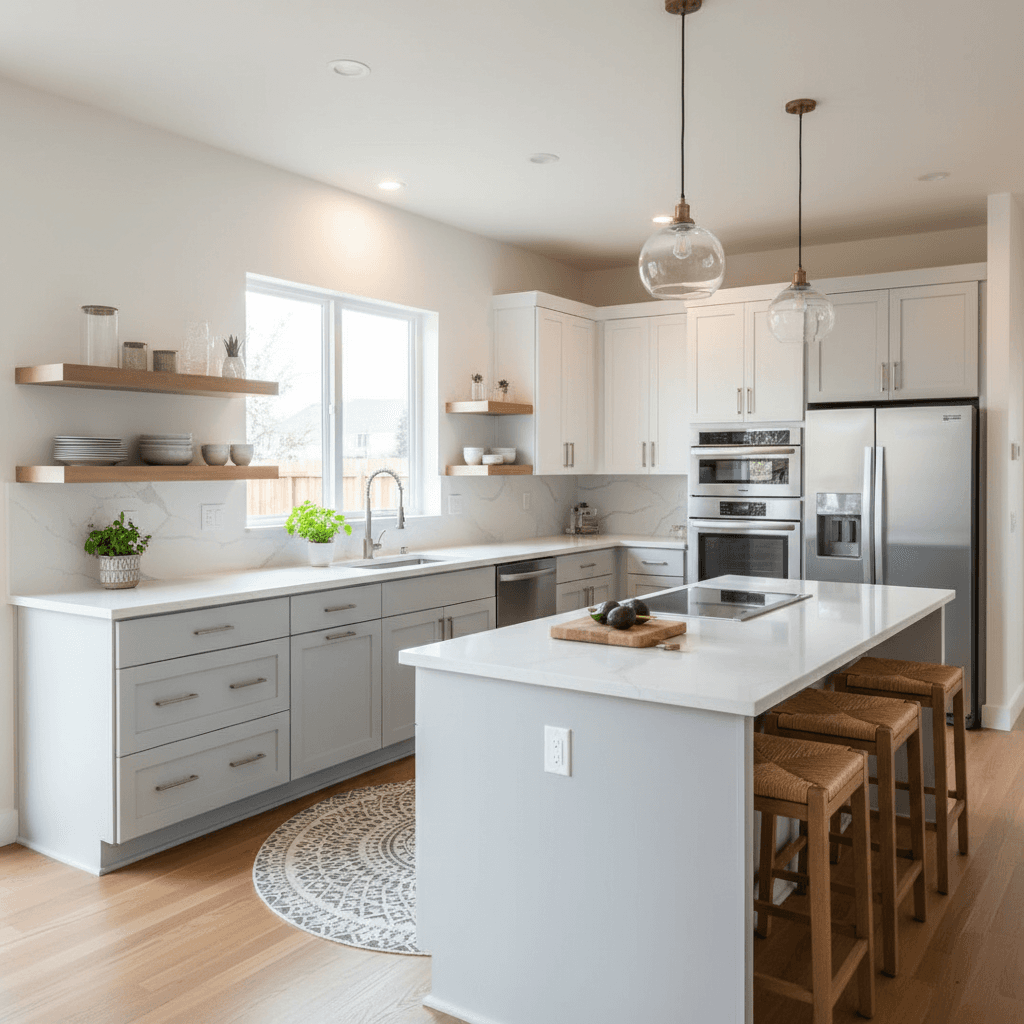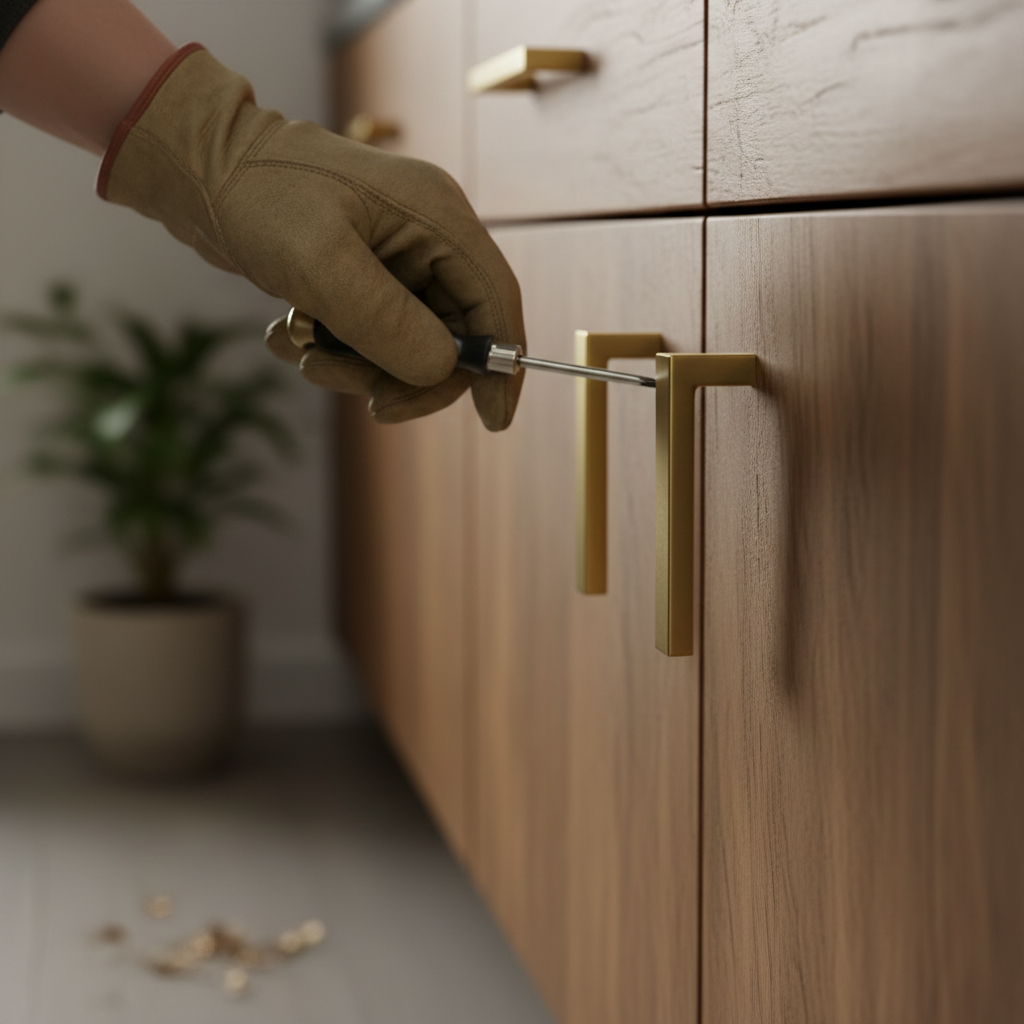
The primary kitchen cabinet hardware trends 2026 emphasize warm living finishes like unlacquered brass and intentional mixed metal combinations that create a curated look. Tactile textures such as knurled and reeded details are gaining popularity alongside oversized statement pulls that serve as decorative focal points for both wide drawers and slim shaker cabinets.
Selecting cabinet hardware often feels like a final, stressful hurdle in a kitchen renovation, yet these small components determine how your cabinetry functions for a decade or more. A beautiful custom cabinet loses its appeal when paired with flimsy pulls or finishes that flake off within months. At Gobes Cabinets, we believe hardware should be viewed as a functional investment rather than just decorative jewelry. As we look toward 2026, the industry is shifting away from generic, mass-produced pieces in favor of tactile textures and living finishes that age gracefully. In this guide, we will explore the rise of muted tones and reeded designs, explain the technical 1/3 rule for proper scaling, and share professional secrets for mixing knobs and pulls. You will also learn which trends to avoid to ensure your Fillmore remodel remains timeless and durable.
Why Hardware is More Than Just Kitchen Jewelry in 2026
Homeowners often hear designers refer to knobs and pulls as the jewelry of the room. While the aesthetic impact is undeniable, this label misses the most critical point; hardware is the hardest working component in your home. Looking toward kitchen cabinet hardware trends 2026, the focus has shifted from purely decorative pieces to a movement we call Modern Heritage. This style blends classic, time-honored shapes with high-tech finishes that resist the oils and acids found on our fingertips.
In Fillmore and throughout Millard County, we see this trend taking hold in mountain-modern homes. A pull might look like a traditional antique piece, but its internal structure and coating are engineered for the heavy use required in a busy family kitchen. Choosing the right hardware can provide a significant visual refresh without the cost of a full renovation, making it a high-impact upgrade for any space.
However, the value of premium hardware is lost if the execution is flawed. At Gobes Cabinets, we emphasize that professional cabinet installation is about more than just hanging boxes; it is about precision. Improperly drilled holes or misaligned pulls can permanently ruin expensive custom doors. Reviewing a completed remodel portfolio shows that the difference between a DIY project and a professional finish lies in those final, tactile details. If you are planning an upgrade, contact Gobes Cabinets to ensure your 2026 design vision is executed with technical accuracy.
Top Finish Trends: The Rise of Living Finishes and Muted Tones
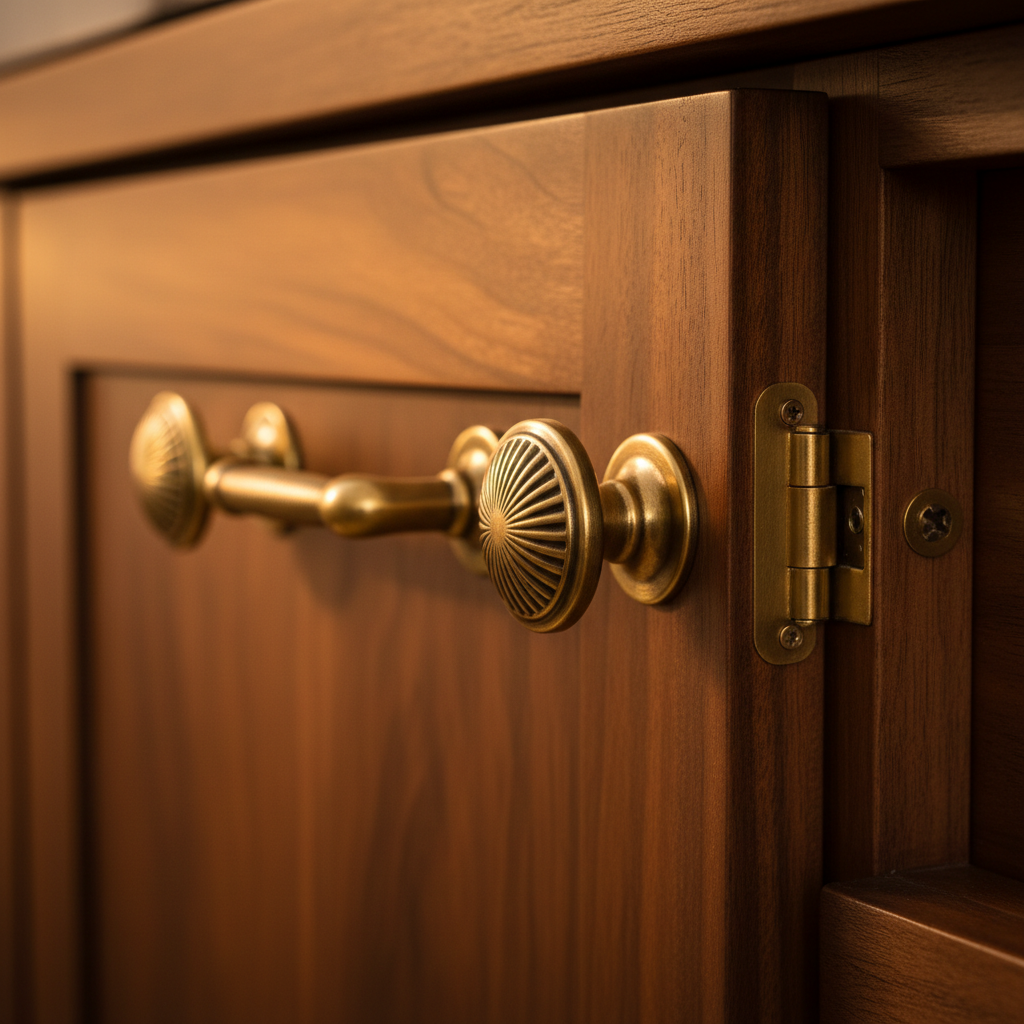
As we navigate kitchen cabinet hardware trends 2026, the industry is moving away from static, high-gloss metals toward what designers call living finishes. These materials, specifically unlacquered brass and antique bronze, are designed to change over time. Unlike standard plated hardware, a living finish reacts with the oils from your hands and the air in your home to develop a unique patina. This evolving look provides an organic, artisanal feel that complements high-end wood species and custom stains.
For homeowners in Fillmore looking for warmth without the maintenance of a patina, champagne gold is emerging as the premier choice. It is important to distinguish this from the polished, yellow brass common in the 1990s. The 2026 version is significantly softer; it features a muted, brushed texture that glows under LED under-cabinet lighting rather than reflecting it harshly. This subtlety makes it highly versatile across various color palettes, from deep forest greens to creamy whites.
While residential projects favor these warm, evolving tones, our commercial work across Utah often requires a different approach. For high-traffic offices or medical spaces, brushed nickel and matte black remain the standard for durability. These finishes are fixed, meaning they look exactly the same on day one as they do years later. They hide fingerprints well and provide a consistent, professional appearance that suits a business environment.
Finish Type | Aging Process | Best Use Case |
|---|---|---|
Unlacquered Brass | Develops patina over time | Custom residential / Heritage looks |
Champagne Gold | Static (non-aging) | Modern kitchen updates |
Brushed Nickel | Static (non-aging) | Commercial / High-traffic |
Matte Black | Static (non-aging) | Industrial / Minimalist designs |
Selecting a finish is only the first step. To see how these metals look against different door styles and light conditions, browsing a completed remodel portfolio can help you visualize the final result. Regardless of the finish, the weight and feel of the metal indicate its quality, a topic we will explore further when discussing the shift toward tactile, textured hardware.
Texture and Tactile Design: Knurled, Reeded, and Hammered Pulls
The shift in kitchen cabinet hardware trends 2026 places a heavy emphasis on the tactile experience. Homeowners are no longer satisfied with smooth, generic surfaces; they want to feel the weight and craftsmanship of the metal every time they open a drawer. This demand for sensory feedback has led to the rise of knurled and reeded textures. A knurled pull features a precise, criss-cross diamond pattern that originated in industrial tool manufacturing. In a kitchen, this provides exceptional grip, which is particularly useful when opening heavy integrated appliance panels or drawers with wet hands.
Reeded pulls offer a similar functional benefit through elegant parallel lines that catch the light and add architectural depth to a minimalist cabinet door. For those seeking an artisanal or mountain-modern aesthetic common in Fillmore, hammered finishes are a standout choice. These pulls feature deliberate, irregular indentations that suggest hand-forged craftsmanship. When we integrate these into a completed remodel portfolio, they add an organic layer that balances the clean lines of high-end wood species.
From an installer’s perspective, these textures require a specific maintenance approach. The grooves in knurled and reeded hardware can trap kitchen debris like flour or grease more easily than smooth pulls. We recommend regular cleaning with a soft brush to prevent buildup. Selecting high-quality, precision-machined hardware ensures these textures feel comfortable rather than abrasive during daily use. This attention to detail is a hallmark of professional cabinet installation, where the goal is a kitchen that performs as well as it looks.
Scale and Placement: Understanding the 1/3 Rule for 2026
Transitioning from the tactile feel of hardware to its physical presence on a cabinet face brings us to the importance of scale. A common question we encounter is how to properly size hardware to avoid a cluttered or undersized look. As we project kitchen cabinet hardware trends 2026, the 1/3 rule has become the gold standard for achieving a balanced, modern aesthetic. This rule dictates that a drawer pull should be approximately one-third of the total width of the drawer front. For example, a 24 inch drawer typically pairs best with an 8 inch pull, providing a clean, intentional silhouette that complements the cabinetry without overwhelming it.
While the 1/3 rule is a reliable baseline, the 2026 trend for wide drawer banks, often 30 inches or larger, has sparked a rise in oversized statement pulls. These longer handles offer superior ergonomics, allowing you to grip the hardware from various angles. From the perspective of professional cabinet installation, these larger pulls are a functional necessity for heavy storage. A wide pull provides two points of contact, which distributes the weight load more effectively than a single center knob. This is critical for drawers holding heavy stoneware or cast iron pots; dual-point hardware reduces the physical stress on the cabinet face and the screw housing, ensuring the wood does not crack or warp over time.
Properly scaling your hardware ensures the kitchen feels proportional and high-end. You can see examples of this ratio in action by browsing our completed remodel portfolio, where we match hardware length to the specific demands of the cabinetry layout. If you are uncertain about which lengths will work best for your custom layout, you can contact Gobes Cabinets for expert guidance on both sizing and technical placement.
How to Mix Knobs and Pulls Like a Professional Designer
Mixing knobs and pulls is not just acceptable; it is often the preferred approach for high-functioning kitchens. As we evaluate kitchen cabinet hardware trends 2026, the strategy remains rooted in ergonomics and daily utility. We typically recommend using knobs on upper cabinet doors. Their smaller profile makes them easier to grab from a standing position and allows for a natural swivel motion. Conversely, pulls are best suited for lower drawers. The horizontal orientation provides the necessary leverage to move heavy stacks of dishes or cookware without straining the cabinet fronts or your wrists.
To maintain visual harmony, designers usually recommend keeping all cabinet hardware in the same metal finish. If you mix styles, such as a reeded pull with a smooth knob, the consistent finish acts as the glue that holds the room together. We are also seeing more homeowners embrace a mixed metal approach, such as pairing a champagne gold faucet with matte black handles. The key to success here is the Rule of Two. Limiting the space to two distinct metal tones prevents the design from feeling chaotic or unfinished.
Proper alignment is essential when mixing shapes. A knob placed too high or a pull centered incorrectly can disrupt the flow of your kitchen. You can see how these combinations look in practice by viewing a completed remodel portfolio. If you are looking for advice on how to balance these elements in your space, contact Gobes Cabinets to ensure your professional cabinet installation meets these design standards.
Hardware Trends to Avoid: What Fails the Durability Test
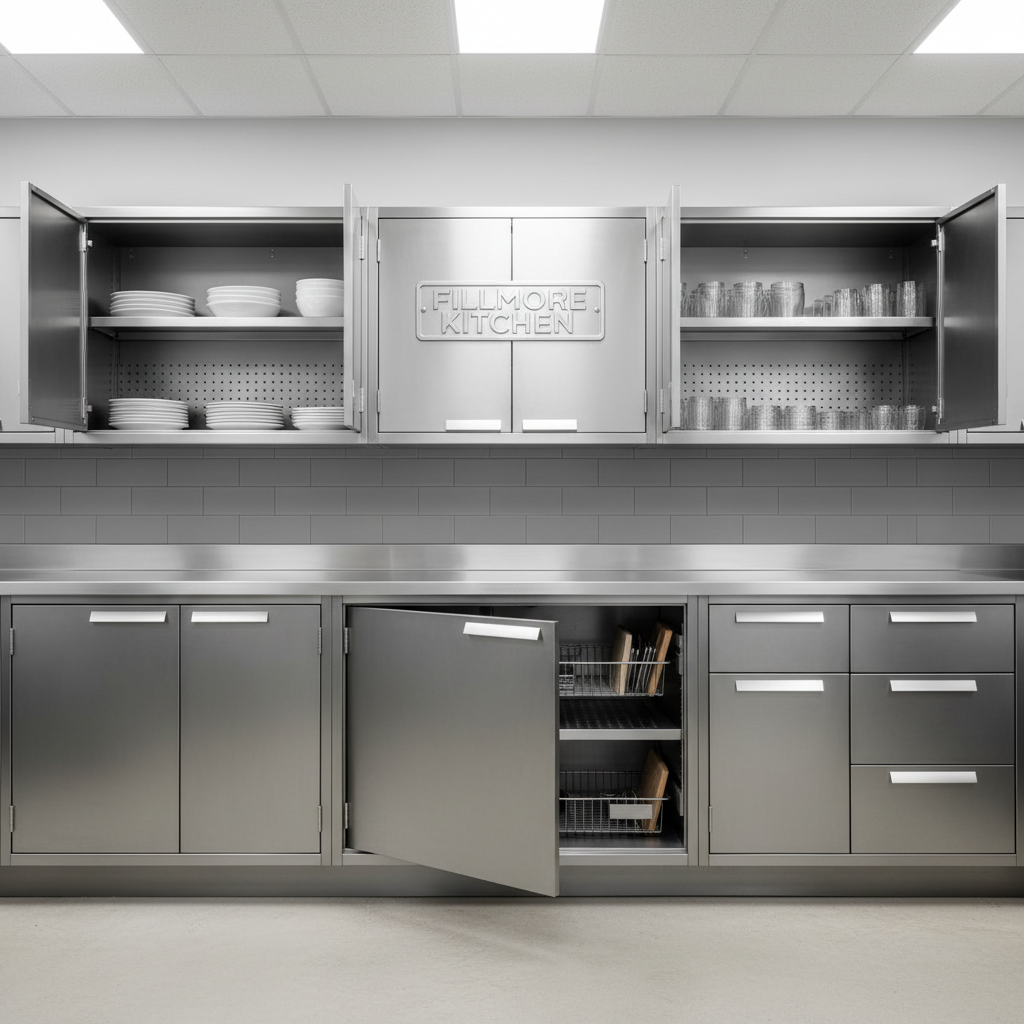
Selecting the right pieces involves more than just matching a finish; it requires recognizing which kitchen cabinet hardware trends 2026 are likely to fail under daily pressure. From an installer’s perspective, certain materials prioritize aesthetics at the expense of longevity. Acrylic and lucite handles, for example, often appear in modern design magazines, but they frequently yellow with UV exposure or develop hairline cracks near the screw housing. Similarly, hollow-core pulls made from thin zinc alloys may look like solid brass in photos, but they feel flimsy in the hand and lack the structural integrity to handle heavy, pot-filled drawers.
Hardware Type | Primary Risk | Functional Impact |
|---|---|---|
Acrylic / Lucite | Material Degradation | Yellowing and cracking over time |
Ornate Filigree | Sanitation Issues | Traps grease and food particles |
Hollow-Core Metal | Structural Weakness | Snaps or bends under heavy loads |
Oversized Cast Iron | Mechanical Strain | Interferes with soft-close calibration |
Maintenance is another critical factor. Overly ornate filigree hardware with deep, intricate recesses acts as a magnet for kitchen grease and flour. These pieces are notoriously difficult to sanitize and often require abrasive cleaning that eventually ruins the finish. Furthermore, extremely heavy decorative hardware can create issues during professional cabinet installation. If the weight of the handle is not properly accounted for, it can interfere with the delicate balance of high-end soft-close hinges, preventing doors from closing flush. When browsing a completed remodel portfolio, look for solid-metal hardware that offers a substantial feel without compromising the mechanical performance of your cabinetry.
Precision Installation: Why Templates and Jigs Matter in Fillmore Remodels
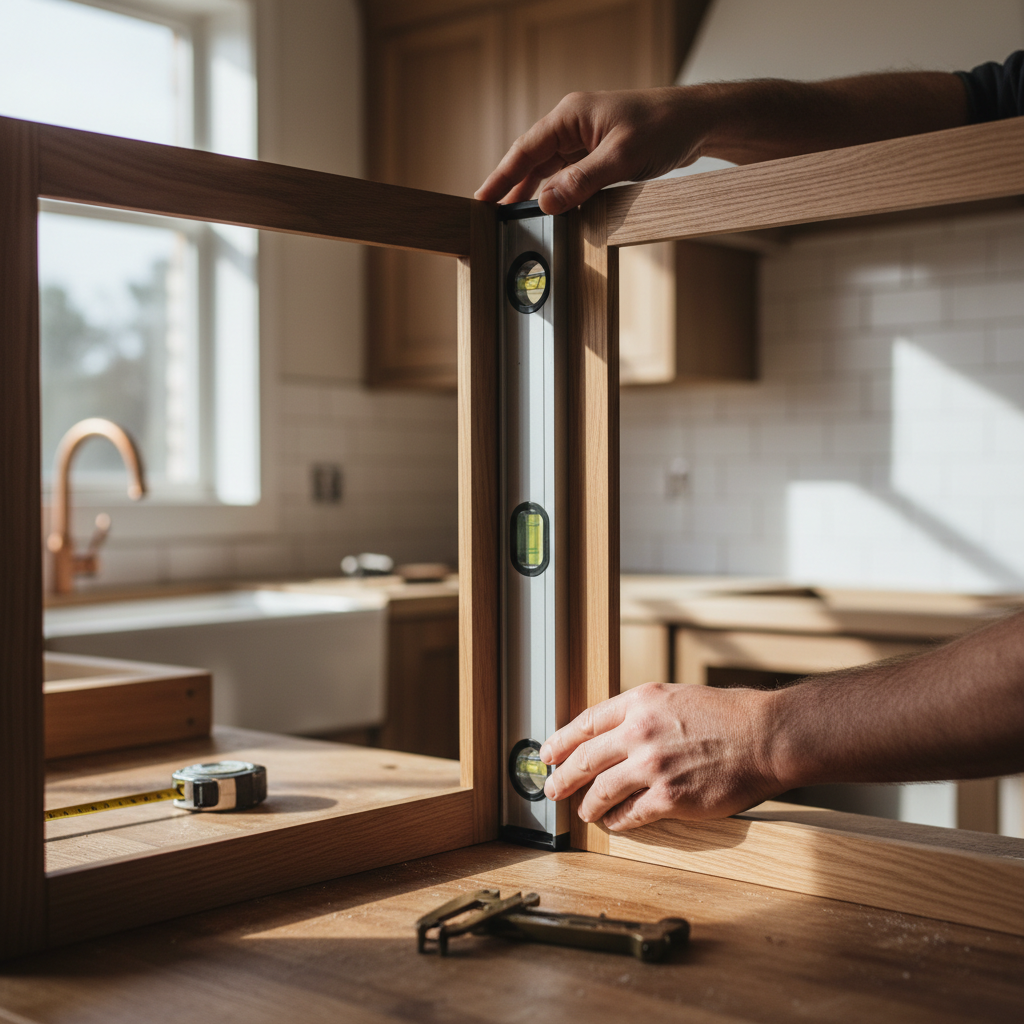
Selecting high-quality handles is only half the battle. Even the most premium pieces following kitchen cabinet hardware trends 2026 will look amateurish if they are misaligned by a mere 1/16th of an inch. In a kitchen with dozens of doors and drawers, the human eye is remarkably adept at spotting a pull that sits slightly higher than its neighbor. At Gobes Cabinets, we eliminate this risk by using heavy duty professional jigs and custom templates rather than relying on manual tape measurements for every hole.
These precision tools allow us to lock in coordinates once and repeat them with absolute consistency across an entire room. This is especially critical for the oversized pulls trending for 2026, which require two perfectly level holes. Beyond alignment, professional techniques protect the cabinetry from structural damage. A common issue during amateur installs is "blowout," where the drill bit splinters the wood or laminate as it exits the back of the door. We prevent this by using specialized backing blocks and high speed bits to ensure a clean, sharp hole on both sides.
This level of professional cabinet installation is what defines a luxury finish. If you examine a completed remodel portfolio, the perfect symmetry is what creates that sense of calm and order. For homeowners in Fillmore looking to protect their investment, you can contact Gobes Cabinets to ensure your new hardware is mounted with mechanical exactitude.
Selecting the right hardware for your 2026 kitchen project involves balancing modern style with professional durability. These small details define both the aesthetic and the daily function of your space. If you want expert help selecting the perfect finishes or understanding specific installation requirements, you can read more about our team and our approach to cabinetry. We are here to provide the guidance you need to ensure your project is a lasting success.