Choosing durable kitchen cabinet door styles involves balancing aesthetic appeal with practical maintenance needs like ease of cleaning and structural longevity. Slab doors are the most hygienic and easy to maintain due to their flat surfaces, while Shaker styles offer a timeless look but require more frequent dusting in recessed corners. For the longest lasting results, select moisture resistant materials and sturdy framed construction that can withstand heavy daily use.
Selecting kitchen cabinet doors often begins with a visual preference, yet many homeowners soon regret choosing intricate designs that trap dust and kitchen grease. While aesthetics set the tone for your home, the structural profile and material finish determine your daily maintenance routine and the longevity of your investment. At Gobes Cabinets, we believe a truly premium kitchen balances sophisticated design with practical durability. This guide examines the most popular door styles through the lens of a professional installer, focusing on which profiles are easiest to keep pristine and which construction methods offer the best resistance to wear. You will learn the specific differences between slab, Shaker, and raised panel doors, alongside a professional breakdown of inset versus overlay configurations to help you make a selection that remains timeless and functional for years.
Why Your Kitchen Cabinet Door Style Matters Beyond Aesthetics
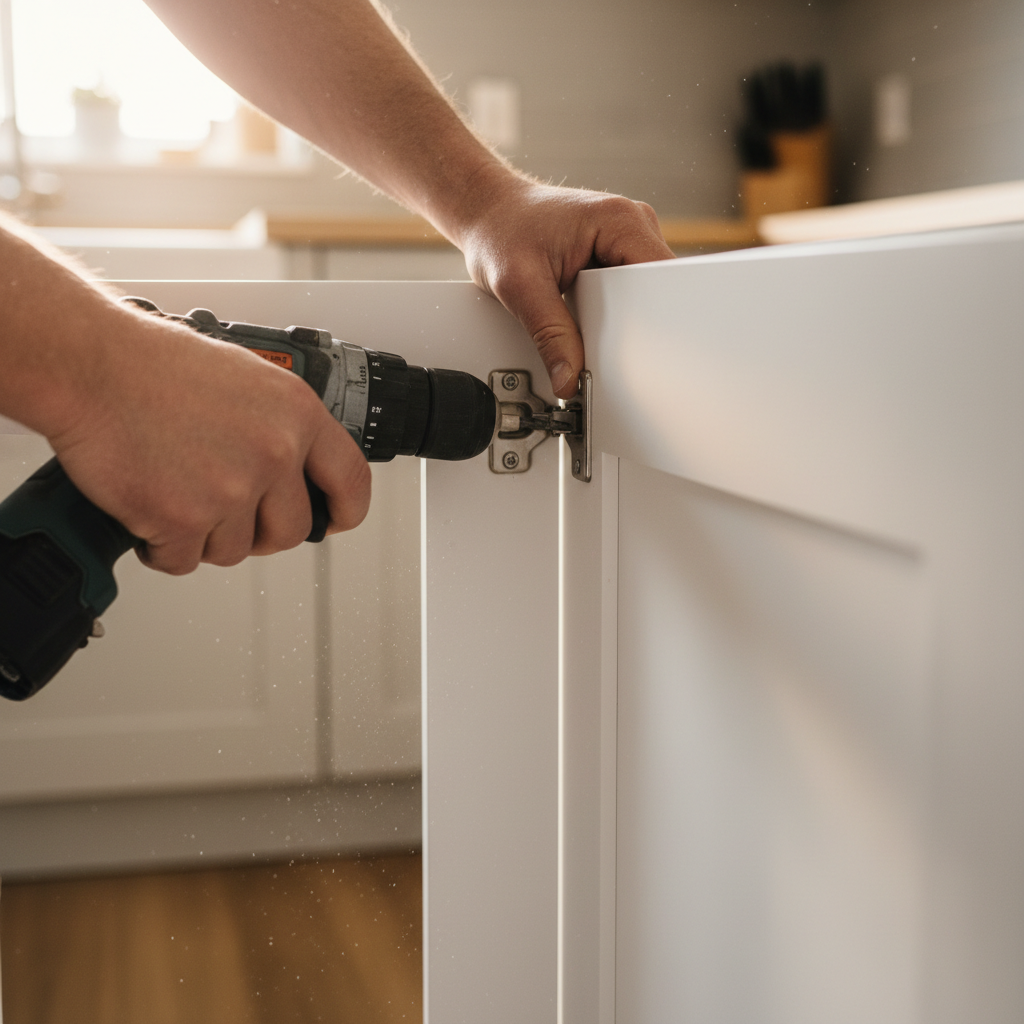
Choosing a door style is often the first decision a homeowner makes based on a photo, yet it is arguably the most critical technical choice for the kitchen’s lifespan. From a professional cabinet installation perspective, the physical architecture of the door determines how it will handle daily wear. Beyond the visual appeal, we evaluate doors based on their "dust ledges," joint stability, and total weight.
Intricate designs with deep grooves or tiered routing create horizontal surfaces that naturally collect flour, grease, and dust. While these look elegant in a showroom, they require significantly more maintenance than a flat surface. Furthermore, the construction method, such as a five piece assembly versus a solid slab, dictates how the door responds to mechanical stress. Heavier doors, like solid wood raised panels, place constant tension on the hinge plates. Without high quality hardware and precise mounting, these styles are prone to sagging over time.
In Fillmore, Utah, the climate plays a major role in how these styles perform. Our region experiences significant seasonal humidity shifts that cause natural wood to expand and contract. If a door style has tight tolerances or complex joints, these environmental changes can lead to binding or visible gaps in the finish. Understanding how wood "breathes" in the high desert is essential when planning modern cabinet layouts that need to remain functional for decades. When considering cabinet replacement services, selecting kitchen cabinet door styles that balance your design goals with these structural realities ensures a kitchen that stays square and clean long after the initial install.
The Cleanest Choice: Flat Panel and Slab Cabinet Doors
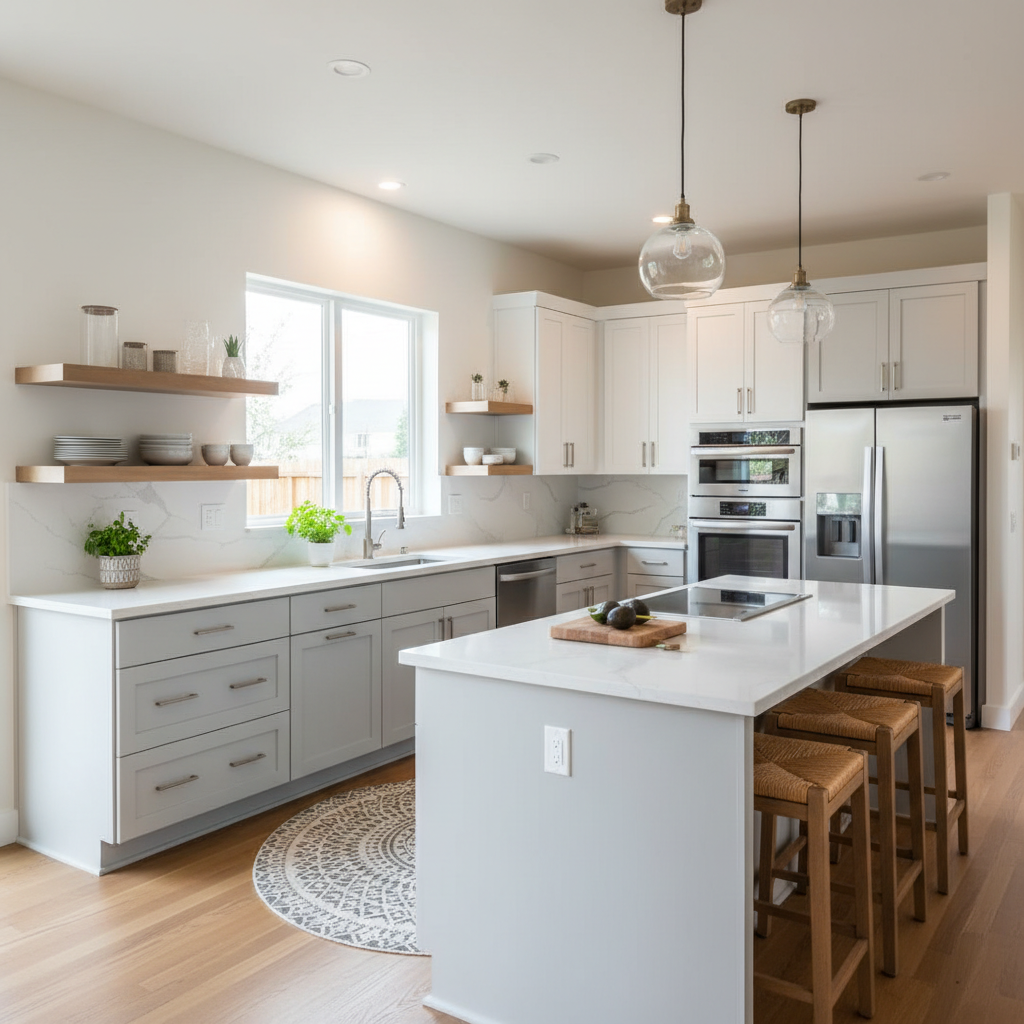
For homeowners prioritizing efficiency, slab doors, often referred to as flat panel doors, represent the ultimate low-maintenance option among kitchen cabinet door styles. The architectural simplicity of a single, smooth surface eliminates the traditional dust traps found in more ornamental designs. When clients ask, what type of cabinet door is easiest to clean? the answer is unequivocally the slab door. Because there are no recessed panels, decorative routing, or 90-degree corners, there is nowhere for airborne grease, flour, or household dust to settle and harden. A simple wipe-down with a microfiber cloth is usually all that is required to maintain the finish.
It is important to distinguish between high-end modern slab doors and basic builder-grade options. Premium slab doors often feature a stable core of high-density fiberboard (HDF) or furniture-grade plywood wrapped in thick wood veneers, heavy acrylics, or high-pressure laminates. These materials are specifically designed to resist the warping that can occur in large slab-style surfaces when exposed to the arid climate of Fillmore. In contrast, basic options might use thin melamine over lower-density particle board, which lacks the same impact resistance and edge-banding durability over time.
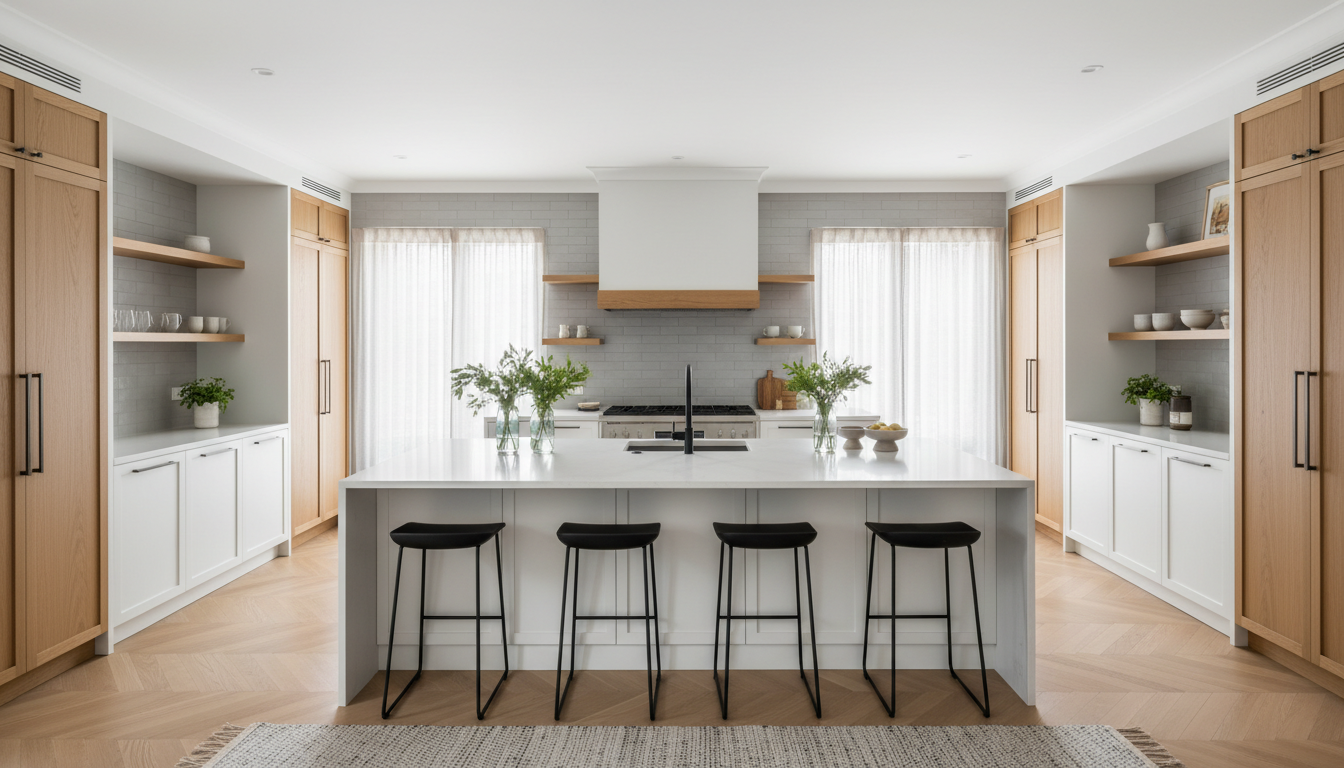
We frequently recommend this style for busy Fillmore households or commercial office spaces where hygiene and efficiency are top priorities. The lack of visual clutter works exceptionally well in modern cabinet layouts that emphasize clean lines and functional minimalism. From a professional cabinet installation standpoint, slab doors also provide the perfect canvas for integrated or push-to-open hardware, which further streamlines the cleaning process by removing protruding handles. If your goal is a kitchen that looks pristine with minimal effort, opting for a high-quality slab during cabinet replacement services is the most practical path forward.
Shaker Style Cabinets: The Timeless Middle Ground
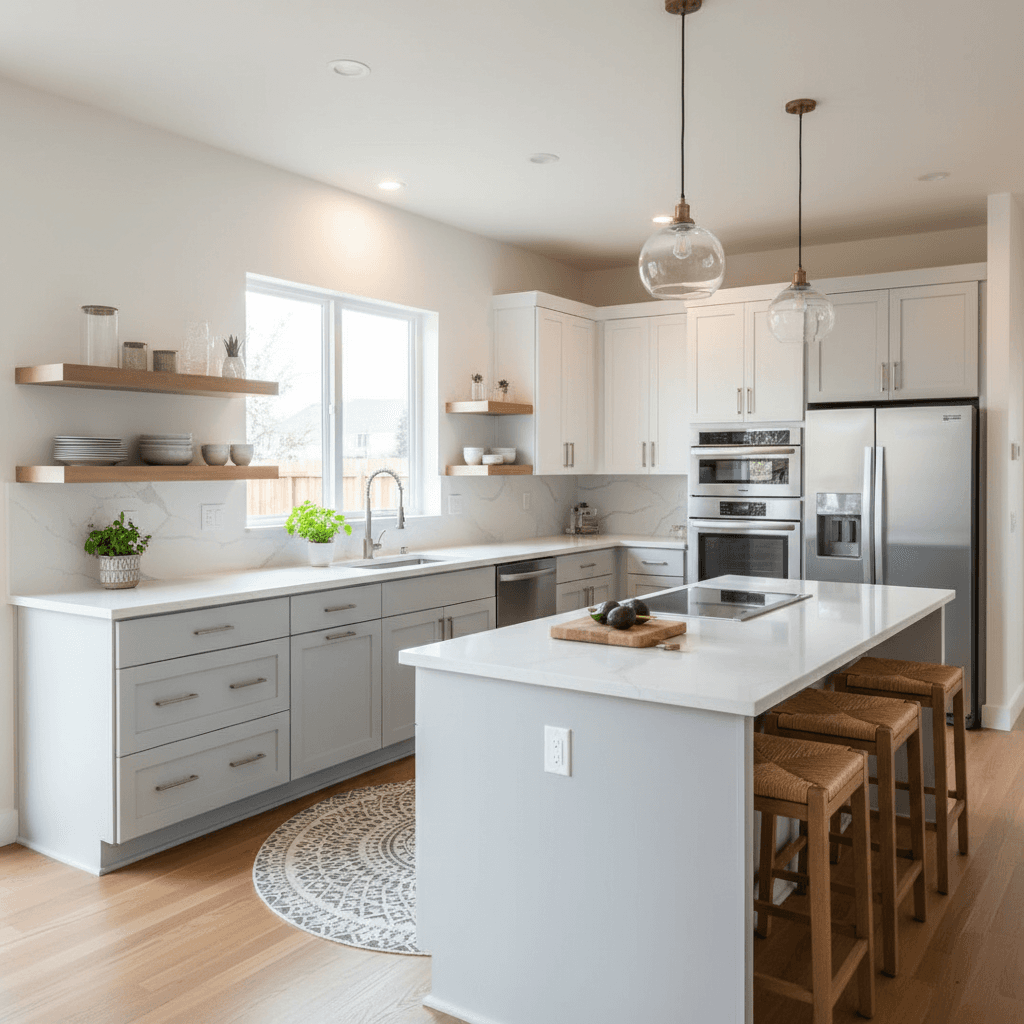
Shaker style dominates residential remodels because of its unmatched versatility. When clients ask if Shaker cabinets are modern or traditional, the answer lies in their chameleon-like ability to adapt to almost any environment. A crisp, white painted Shaker door paired with matte black pulls fits seamlessly into modern cabinet layouts, while a warm, stained wood Shaker with antique bronze hardware leans toward a classic, traditional aesthetic. This adaptability makes them one of the most popular kitchen cabinet door styles for maintaining high resale value.
From the perspective of professional cabinet installation, Shaker doors offer excellent structural stability due to their five piece rail and stile construction. However, they introduce a specific maintenance challenge that slab doors avoid. The sharp 90 degree angle where the recessed center panel meets the outer frame creates a physical ledge. In a busy kitchen, this ledge becomes a landing strip for dust, flour, and airborne grease. Over time, these particles can settle into the corners, making them difficult to clean without specialized tools or meticulous detailing.
To address this during cabinet replacement services, we often recommend selecting Shaker doors with a slightly eased or beveled inside edge. Instead of a sharp, vertical drop into the panel, an eased profile creates a subtle slope. This minor architectural adjustment allows a cleaning cloth to glide through the corner more effectively, preventing the buildup of grime. For Fillmore homeowners who want a timeless look without the extra scrubbing, these modified profiles provide a practical balance between form and function.
Raised Panel and Traditional Styles: Elegance vs Maintenance
Raised panel doors represent a peak of traditional craftsmanship, characterized by a center panel that is elevated to the same plane as the surrounding frame. While these offer a formal, high-end aesthetic, they present a significant detail trap. The intricate routing and deep profiles create multiple horizontal tiers where cooking oils and dust accumulate. In a busy kitchen, this requires scrubbing into narrow crevices that a simple wipe cannot reach. Choosing these kitchen cabinet door styles means committing to a more rigorous cleaning schedule to prevent grime from hardening in the decorative grooves.
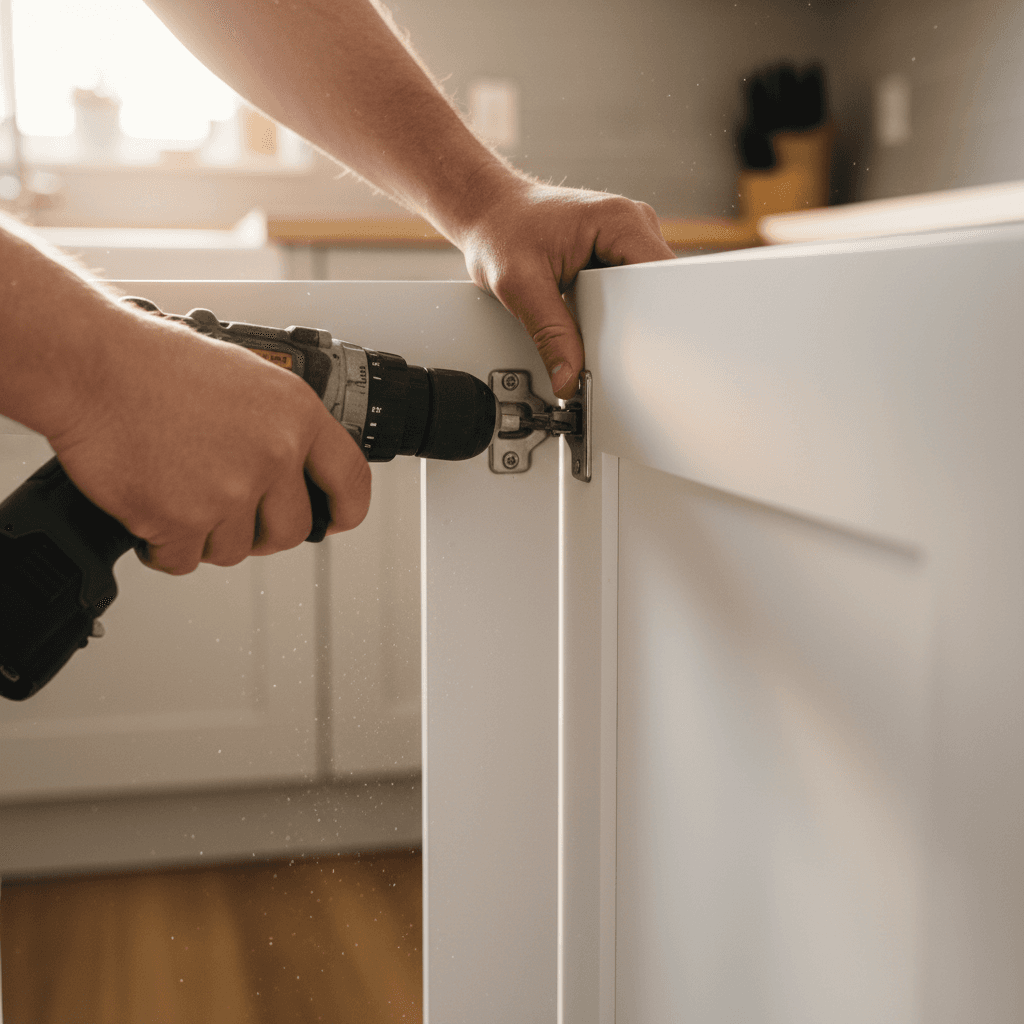
From the perspective of professional cabinet installation, the primary concern is physical mass. Unlike Shaker doors that often use thin plywood centers, raised panel doors are typically constructed from thicker, solid wood pieces. This extra weight places immense stress on the cabinet box and hardware. To avoid the common issue of door sag, high-grade, six-way adjustable hinges are non-negotiable. During cabinet replacement services, we prioritize heavy-duty hardware that allows for the fine-tuning necessary to keep these heavy doors perfectly aligned. This is especially vital in Fillmore, where seasonal wood expansion can put additional pressure on the hinge plates, potentially leading to misalignment if the hardware is not up to the task.
Comparing Inset vs Overlay: A Professional Breakdown
Beyond the profile of the door itself, how the door sits against the cabinet box determines the final architectural look and the level of long-term maintenance required. When evaluating cabinet door styles inset vs overlay, the choice impacts both the visual "cleanliness" of the lines and the technical demands of the installation.
Style | Construction | Visual Impact | Installation Difficulty |
|---|---|---|---|
Partial Overlay | Door sits on the frame, leaving ~1 inch of frame visible. | Traditional, standard look. | Low; very forgiving of minor misalignments. |
Full Overlay | Door covers the entire face frame with minimal gaps. | Seamless, modern, and sleek. | Moderate; requires precise hinge adjustment. |
Inset | Door sits flush within the frame opening. | High-end, custom furniture look. | High; requires perfect squareness and tight tolerances. |
Full overlay doors are excellent for modern cabinet layouts because they maximize interior space and hide the face frame entirely, reducing the surfaces where dust can settle. However, inset doors are often considered the gold standard for luxury cabinet replacement services. Because the door is set into the frame rather than on top of it, the craftsmanship is fully exposed. This style requires the highest level of professional cabinet installation expertise. There is no room for error; the "reveal," or the small gap between the door and the frame, must be perfectly uniform on all four sides to prevent the kitchen from looking skewed.
For homeowners in Fillmore, choosing inset kitchen cabinet door styles requires an understanding of our local environment. Our high desert climate features significant shifts in seasonal humidity, causing solid wood to "breathe." While an overlay door has room to expand without notice, an inset door has very tight tolerances. During a particularly humid stretch, a solid wood inset door may swell slightly, potentially causing it to rub against the frame if the initial installation did not account for this movement. We typically plan for these seasonal adjustments during the setup phase to ensure the doors remain functional and beautiful year-round.
Material Durability: Solid Wood vs MDF vs Thermofoil
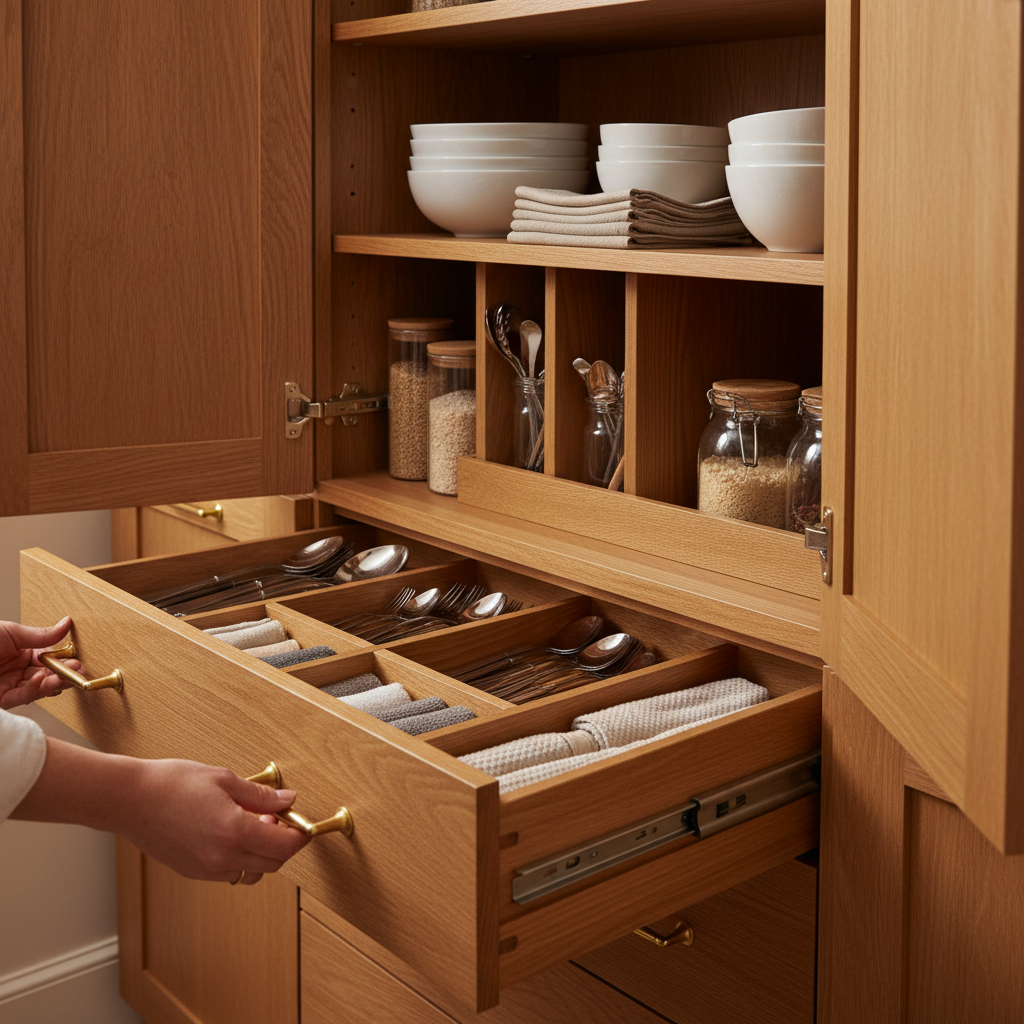
The choice of material is just as vital as the design itself when selecting kitchen cabinet door styles. For homeowners opting for a painted finish, particularly in Shaker or recessed panel designs, Medium Density Fiberboard (MDF) is often the superior technical choice. Solid wood naturally expands and contracts as Fillmore’s humidity levels shift. In a five piece assembly, this movement causes the paint to bridge and crack at the joints where the rails meet the stiles. MDF remains dimensionally stable, providing a perfectly smooth surface that prevents these hairline fractures from forming over time.
Conversely, solid wood is the ideal medium for slab doors when the design intent is to highlight the natural grain of white oak, walnut, or maple. Because slab doors provide a broad, continuous canvas, they allow the organic beauty of the wood to become a focal point. Modern woodworking tools and advanced finishing techniques, such as conversion varnishes and UV-cured topcoats, have significantly improved the resistance of wood and MDF to moisture and impact. During cabinet replacement services, we ensure that every edge is precision-sealed to protect the core from daily wear. Whether executing professional cabinet installation for residential or commercial spaces, matching the material to the door architecture is essential for the success of modern cabinet layouts.
Choosing the right cabinet door style involves finding a balance between your personal aesthetic and the practical needs of a busy kitchen. Whether you prefer the clean lines of a Shaker design or the modern look of flat panels, prioritizing durability and ease of maintenance ensures your investment lasts for years. If you want expert help navigating these choices, you can learn more about our approach and our commitment to quality. We are here to help you create a space that is both beautiful and functional.